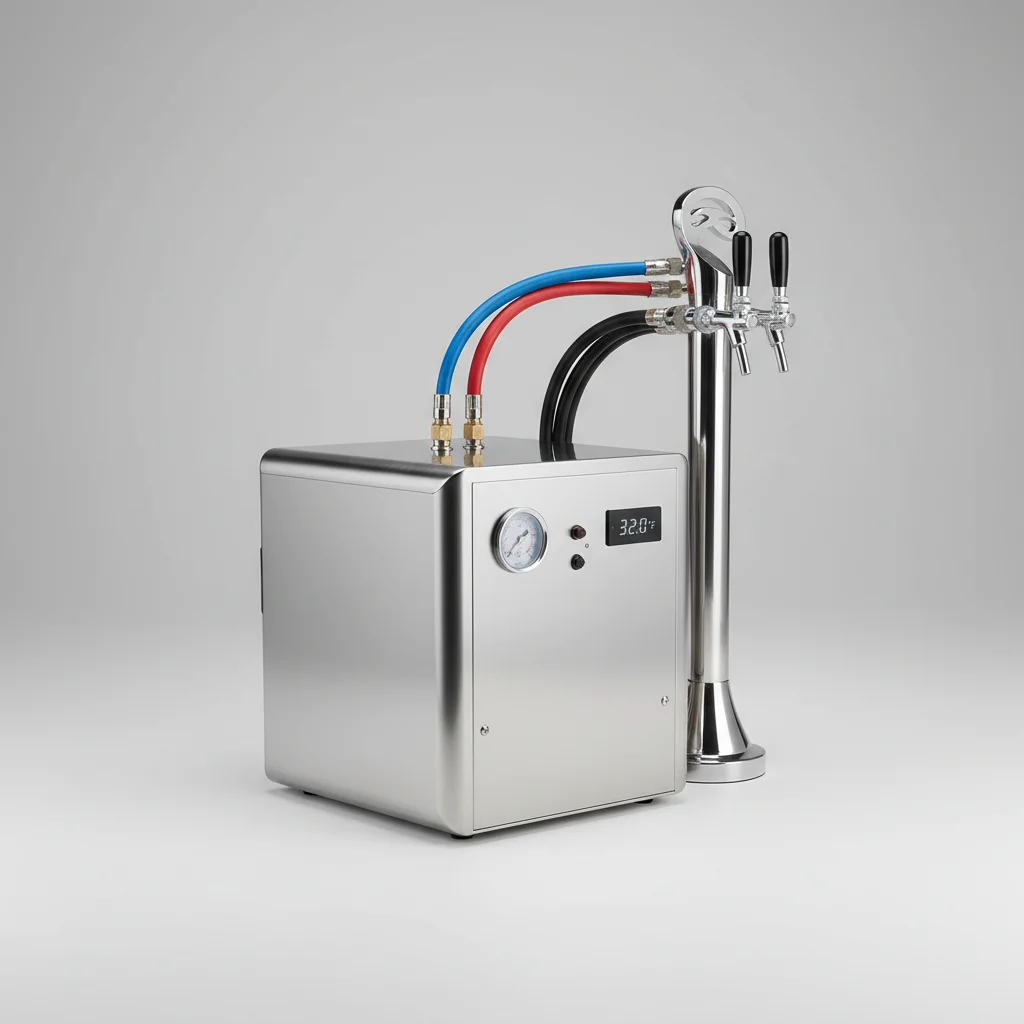
Beer dispenser glycol chillers are essential for maintaining optimal beer temperature over long distances, especially in commercial setups. You need a glycol chiller if your beer lines run more than 25 feet from the keg to the tap, or if you experience significant temperature fluctuations in your dispensing environment. These systems circulate a chilled glycol solution through a separate line that runs alongside your beer lines, ensuring your brew stays cold from the moment it leaves the keg until it hits the glass.
How Glycol Chillers Work for Beer Dispensing
Glycol chillers operate on a simple yet effective principle. A refrigeration unit cools a mixture of food-grade glycol and water to a very low temperature, typically around 28-32°F (-2 to 0°C). This chilled solution is then pumped through a closed-loop system of insulated tubing that runs parallel to your beer lines. This setup, often referred to as a ‘trunk line,’ acts as a cold jacket, preventing the beer from warming up as it travels through the lines. The glycol absorbs any heat gain from the surrounding environment, returning to the chiller to be re-cooled.
The efficiency of a glycol chiller depends on several factors, including the length and diameter of your beer lines, the ambient temperature, and the desired beer temperature. Proper insulation of the trunk line is crucial to minimize heat transfer and ensure the system operates effectively. Without a glycol chiller, beer traveling long distances can warm up considerably, leading to excessive foaming and a less enjoyable drinking experience.
Benefits of Using a Glycol Chiller System
Implementing a glycol chiller system offers several significant advantages, particularly for commercial establishments or large home setups. The primary benefit is consistent temperature control, which is vital for preserving the quality and taste of your beer. By maintaining a steady cold temperature, you reduce the risk of spoilage and ensure every pour is as fresh as the first.
- Ensures consistent beer temperature from keg to tap.
- Reduces foaming and beer waste due
to temperature fluctuations. - Allows for longer beer line runs without compromising quality.
- Improves the overall taste and presentation of dispensed beer.
- Extends the shelf life of opened kegs by preventing warming.
Beyond temperature, glycol chillers also contribute to reduced beer waste. When beer warms up in the lines, it can cause excessive foaming, leading to more beer being poured down the drain. A properly chilled system minimizes this issue, saving you money in the long run.This efficiency makes them a worthwhile investment for any high-volume dispensing operation.
When is a Glycol Chiller Necessary?
|
Our Picks for the Best Beer Dispenser in 2026
As an Amazon Associate I earn from qualifying purchases.
|
||
| Num | Product | Action |
|---|---|---|
| 1 | BeerSquad Beer Tower - 3L 100 oz. Clear Beverage Tower Dispenser with Included Ice Tube, Easy Clean, Dual Action Integrated Tap |

|
| 2 | Drink Tower, 3L Mimosa Tower Dispenser With Ice Tube and Led Light, Tabletop Beer Dispenser 3.17 Qt./101oz, Ideal for Parties Bars Pubs Restaurants |
|
| 3 | Beer Dispenser, 100oz/3.2 qt Mimosa Tower Dispenser with Ice Tube and LED Light for Margarita, Liquor, Beverage - Tabletop Drink Tower Dispensers for Parties |
|
| 4 | Hammer + Axe Beverage Dispenser – 88 oz Party Drink Dispenser with Ice Tube & Tap| Drink Fountain for Beer, Water, Iced Tea| Mimosa Tower| Margarita Tower| BBQ & Tailgate Essential| Home Bar Accessory |
|
| 5 | 2pcs Beer Giraffe Dispenser, 100oz/3.2 qt Mimosa Tower Dispenser with Ice Tube and LED Light, 3L Tabletop Drink Tower Dispensers for Beer, Margarita, Liquor, Beverage |
|
| 6 | Beer Dispenser Margarita Tower, 50oz Mimosa Tower Dispenser with Ice Tube and LED Light, Tabletop Drink Tower Dispenser 1.6 qt for Beer, Margarita, Liquor, Beverage |
|
| 7 | Hammer + Axe Beverage Dispenser – 88 oz Party Drink Dispenser with Ice Tube & Tap| Drink Fountain for Beer, Water, Iced Tea| Mimosa Tower| Margarita Tower| BBQ & Tailgate Essential| Home Bar Accessory |
|
| 8 | OGGI Beer Tower 88oz - Beverage Dispenser with Spigot & Ice Tube, Margarita Tower, Mimosa Tower, Perfect Drink Dispensers for Parties, Drink Tower, Holds 6 Pints of Beer – Stainless |
|
| 9 | -Beverage Dispenser - Drink Dispensers for Parties -Perfect Home Bar Accessories - Alcohol, Beer & Liquor Dispenser - Mimosa Tower |
|
| 10 | Beer Tower 3L/100oz Beverage Dispenser with fluent Spigot & Ice Tube,Margarita Tower, Mimosa Tower, Tabletop Liquor Drink Dispenser for Parties, Bars, Pubs, Restaurants |
|
Deciding whether a glycol chiller is a necessary addition to your beer dispensing setup primarily depends on the distance between your kegs and your taps. If your beer lines are shorter than 25 feet, a standard air-cooled or direct-draw system might suffice, as the beer won’t have enough time to warm significantly. However, for runs exceeding this length, a glycol chiller becomes almost indispensable. Consider the layout of your bar or home setup; if your walk-in cooler is far from your serving area, a chiller is likely required.
Another factor is the ambient temperature of the environment where your beer lines are routed. If your lines pass through warm areas, such as above a kitchen or through unconditioned spaces, a glycol chiller will be crucial to counteract the heat gain.Without it, you’ll struggle to serve consistently cold beer, regardless of how cold your kegs are initially.
Installation and Maintenance Considerations
Installing a glycol chiller system involves running the trunk line, connecting the chiller unit, and ensuring proper insulation. While the process can be complex, many manufacturers provide detailed instructions, and professional installation services are available. The trunk line, which houses both the beer lines and the glycol lines, needs to be routed carefully to avoid kinks and ensure smooth flow. Proper sizing of the chiller unit is also important; it must have enough capacity to cool the volume of glycol required for your specific line length and number of taps.
Maintenance for glycol chillers is relatively straightforward but essential for longevity and performance. Regular checks of the glycol level and concentration are necessary, as the solution can evaporate or become diluted over time. Cleaning the condenser coils on the chiller unit will prevent dust buildup and ensure efficient cooling. Periodically, the glycol solution itself may need to be replaced, typically every 1-2 years, to maintain its effectiveness and prevent bacterial growth. Adhering to these maintenance practices will ensure your glycol chiller provides reliable, cold beer for years to come.
Get our weekly buyer guide
Practical specs, not advice. Unsubscribe anytime.
