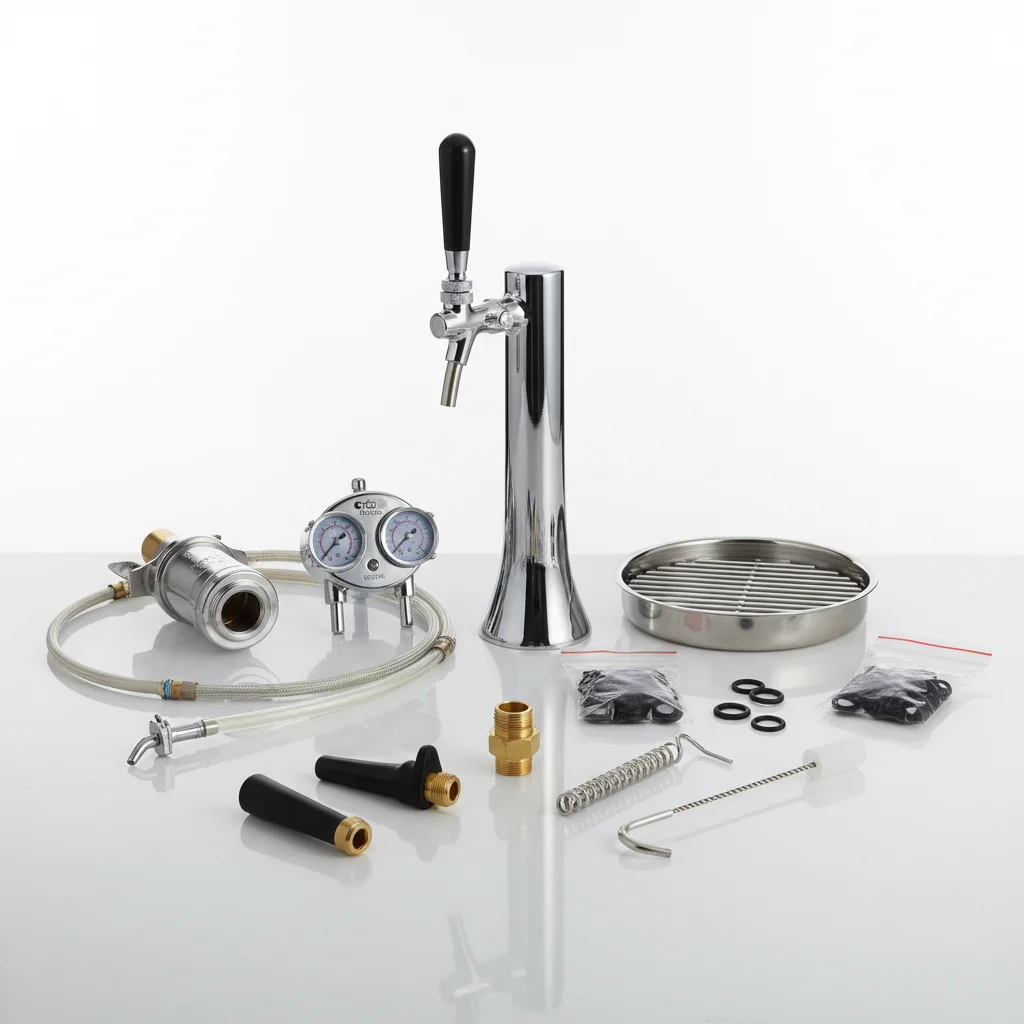
A typical home beer dispenser, commonly known as a kegerator, relies on at least 10 essential components working together to deliver a perfect pour. These critical parts include the CO2 tank, pressure regulator, keg coupler, beer lines, air lines, tap tower, faucet, drip tray, and the refrigeration unit. Understanding the function of each component is crucial for proper operation, effective troubleshooting, and maintaining your system for optimal performance.
The CO2 System: Pressure and Flow Control
The CO2 tank and regulator are fundamental to your beer dispensing system, providing the necessary pressure to push beer from the keg and maintain its carbonation. The CO2 tank stores compressed carbon dioxide, while the regulator reduces the high pressure from the tank to a safe, consistent serving pressure, typically between 10-14 PSI for most beers. Correct adjustment of the regulator is vital to prevent issues like excessively foamy or flat beer.
Air lines connect the CO2 regulator to the keg coupler, creating a sealed pathway for the gas. These lines are generally made from thick-walled vinyl or braided PVC to withstand pressure and prevent leaks. Regular inspection of these lines for any cracks or kinks is important for consistent system performance.
Connecting the Keg: Couplers and Lines
The keg coupler acts as the crucial link between your CO2 system and the beer keg. It attaches to the keg valve and features two connections: one for the CO2 line and another for the beer line. Various types of couplers exist, such as D-system and S-system, which depend on the specific keg type. Ensuring you have the correct coupler for your keg is paramount for a successful setup and proper dispensing.
Beer lines transport the beer from the keg coupler to the faucet. These lines are typically constructed from food-grade vinyl or barrier tubing to prevent flavor contamination and inhibit bacterial growth. The precise length and diameter of the beer line are critical for establishing proper resistance, which helps control foam and ensures a smooth, consistent pour.
The Dispensing End: Tower, Faucet, and Drip Tray
|
Our Picks for the Best Beer Dispenser in 2026
As an Amazon Associate I earn from qualifying purchases.
|
||
| Num | Product | Action |
|---|---|---|
| 1 | -Beverage Dispenser - Drink Dispensers for Parties -Perfect Home Bar Accessories - Alcohol, Beer & Liquor Dispenser - Mimosa Tower |

|
| 2 | BeerSquad Beer Tower - 3L 100 oz. Clear Beverage Tower Dispenser with Included Ice Tube, Easy Clean, Dual Action Integrated Tap |
|
| 3 | Beer Dispenser Margarita Tower, 50oz Mimosa Tower Dispenser with Ice Tube and LED Light, Tabletop Drink Tower Dispenser 1.6 qt for Beer, Margarita, Liquor, Beverage |
|
| 4 | Hammer + Axe Beverage Dispenser – 88 oz Party Drink Dispenser with Ice Tube & Tap| Drink Fountain for Beer, Water, Iced Tea| Mimosa Tower| Margarita Tower| BBQ & Tailgate Essential| Home Bar Accessory |
|
| 5 | Beer Tower 3L/100oz Beverage Dispenser with fluent Spigot & Ice Tube,Margarita Tower, Mimosa Tower, Tabletop Liquor Drink Dispenser for Parties, Bars, Pubs, Restaurants |
|
| 6 | Drink Tower, 3L Mimosa Tower Dispenser With Ice Tube and Led Light, Tabletop Beer Dispenser 3.17 Qt./101oz, Ideal for Parties Bars Pubs Restaurants |
|
| 7 | 2pcs Beer Giraffe Dispenser, 100oz/3.2 qt Mimosa Tower Dispenser with Ice Tube and LED Light, 3L Tabletop Drink Tower Dispensers for Beer, Margarita, Liquor, Beverage |
|
| 8 | OGGI Beer Tower 88oz - Beverage Dispenser with Spigot & Ice Tube, Margarita Tower, Mimosa Tower, Perfect Drink Dispensers for Parties, Drink Tower, Holds 6 Pints of Beer – Stainless |
|
| 9 | Hammer + Axe Beverage Dispenser – 88 oz Party Drink Dispenser with Ice Tube & Tap| Drink Fountain for Beer, Water, Iced Tea| Mimosa Tower| Margarita Tower| BBQ & Tailgate Essential| Home Bar Accessory |
|
| 10 | Beer Dispenser, 100oz/3.2 qt Mimosa Tower Dispenser with Ice Tube and LED Light for Margarita, Liquor, Beverage - Tabletop Drink Tower Dispensers for Parties |
|
The tap tower houses the beer lines and serves as the mounting point for the faucet. Towers are available in various styles and finishes, ranging from single-tap to multi-tap configurations. The faucet, or tap, is the component from which the beer is dispensed into your glass. Many types of faucets exist, including standard chrome, stainless steel, and specialized stout faucets, each offering distinct pouring characteristics.
The drip tray is an often-underestimated yet essential component. It effectively catches any spills or drips from the faucet, keeping your serving area clean and preventing sticky messes. Drip trays can be surface-mounted or recessed and are typically made of stainless steel for easy cleaning and durability.
Refrigeration and Maintenance Components
The refrigeration unit, whether a dedicated kegerator or a converted refrigerator, maintains the beer at its ideal serving temperature. This is crucial for both preserving taste and preventing spoilage. A consistent temperature, typically between 38-40°F (3-4°C), is recommended for most lagers and ales.
- CO2 Tank: Stores compressed carbon dioxide.
- Pressure Regulator: Controls CO2 pressure to the keg.
- Keg Coupler: Connects CO2 and beer lines to the keg.
- Beer Lines: Transports beer from keg to faucet.
- Faucet: Dispenses beer into your glass.
Regular cleaning and maintenance of all these parts are vital for the longevity of your beer dispenser and the quality of your pours. Disassembling and cleaning the faucet and beer lines after each keg, or at least every few weeks, prevents the buildup of beer stone and bacteria.
Frequently Asked Questions
What are the most essential components of a home beer dispenser?
The most essential components of a home beer dispenser include the CO2 tank, pressure regulator, keg coupler, beer lines, air lines, tap tower, faucet, drip tray, and the refrigeration unit. These 9-10 parts work in unison to ensure proper beer dispensing and carbonation.
How does the CO2 system contribute to beer dispensing?
The CO2 system, comprising the CO2 tank and regulator, provides the necessary pressure to push beer from the keg and maintain its carbonation. The regulator reduces tank pressure to a consistent 10-14 PSI, which is vital for preventing foamy or flat beer.
Why is the correct keg coupler important for a beer dispenser?
The correct keg coupler is important because it bridges the CO2 system and the beer keg, attaching to the keg valve. Different keg types (e.g., D-system, S-system) require specific couplers, and using the wrong one will prevent proper connection and dispensing.
What role do beer lines play in a dispensing system?
Beer lines transport beer from the keg coupler to the faucet. They are typically made of food-grade vinyl or barrier tubing to prevent flavor contamination. Their length and diameter are critical for creating proper resistance, which helps control foam and ensures a smooth pour.
How often should beer dispenser parts be cleaned?
Beer dispenser parts, especially the faucet and beer lines, should be cleaned regularly to prevent buildup of beer stone and bacteria. It is recommended to disassemble and clean these components after each keg, or at least every few weeks, to maintain beer quality and system longevity.
Get our weekly buyer guide
Practical specs, not advice. Unsubscribe anytime.

The info on the CO2 tank was good, but I was hoping for more detail on different tank sizes and where to get them refilled. It’s a bit of a hassle finding a place locally that does CO2, and I’m always worried about running out mid-party. Still, knowing the tank’s function is key, so it was a decent overview.
This was super helpful for troubleshooting my new setup. I was having trouble with my beer lines getting foamy, and I realized I hadn’t properly cleaned them before the first use. A quick flush and now everything is flowing smoothly. It’s great to have a clear breakdown of each part and its role, especially for a newbie like me.
I recently upgraded my old tap tower and faucet, and the difference in pour quality is night and day. My old one was leaking a bit, and I didn’t realize how much it was affecting the taste. The explanation of how the faucet works with the tower really helped me understand why a good seal is so important. Definitely worth the investment for a better home bar experience.
I’ve been struggling with inconsistent pours from my kegerator for months, and I finally figured out it was my pressure regulator. After reading about the importance of maintaining 10-14 PSI, I invested in a new dual-gauge regulator. What a difference! My beers are perfectly carbonated now, and the foam is gone. Wish I’d paid more attention to this component sooner.