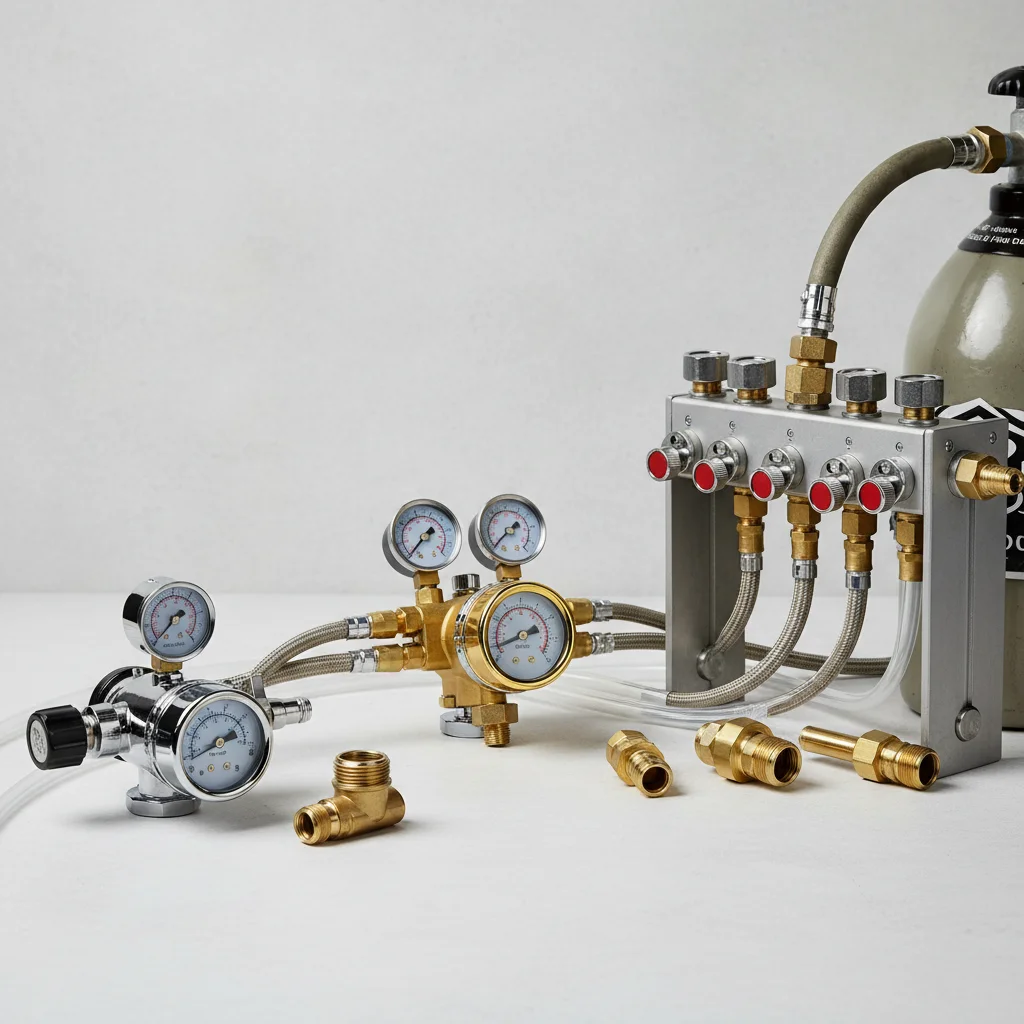
For optimal control over your draft beer system, you typically need one regulator per keg, or one primary regulator with a secondary regulator for each additional keg if you’re running multiple pressures from a single CO2 tank. This setup ensures each beer line receives the precise pressure required for perfect pours, preventing issues like excessive foam or flat beer.
Understanding Primary and Secondary Regulators
A primary regulator connects directly to your CO2 tank. Its main function is to reduce the high pressure from the tank to a manageable working pressure, usually between 0-60 PSI. If you’re only dispensing one type of beer at a single pressure, a single primary regulator is sufficient. However, when you introduce multiple kegs, especially those requiring different serving pressures, secondary regulators become essential.
Secondary regulators attach to the output of a primary regulator or a gas manifold. They allow you to further reduce and fine-tune the pressure for individual beer lines. This is crucial for setups where you might be serving a stout that requires lower pressure alongside a lager that needs higher pressure, all from the same CO2 source. Without secondary regulators, achieving these varied pressures would be impossible, leading to compromised beer quality.
Single Keg Setups: Simplicity and Efficiency
For a basic home kegerator with just one keg, a single primary regulator is all you need. This setup is straightforward to install and maintain, making it ideal for beginners or those who prefer to keep things simple. The primary regulator will connect to your CO2 tank, and then a single gas line will run directly to your keg coupler. Ensure you select a regulator with a clear pressure gauge to easily monitor your CO2 levels and serving pressure.
When choosing a primary regulator, consider models that offer durable construction and precise adjustment capabilities. A good quality regulator will provide consistent pressure, which is key to preventing over-carbonation or under-carbonation of your beer. Look for features like a safety relief valve, which is a critical component for preventing dangerous pressure buildups in your system.
Multi-Keg Systems: The Role of Secondary Regulators
|
Our Picks for the Best Beer Dispenser in 2026
As an Amazon Associate I earn from qualifying purchases.
|
||
| Num | Product | Action |
|---|---|---|
| 1 | Hammer + Axe Beverage Dispenser – 88 oz Party Drink Dispenser with Ice Tube & Tap| Drink Fountain for Beer, Water, Iced Tea| Mimosa Tower| Margarita Tower| BBQ & Tailgate Essential| Home Bar Accessory |

|
| 2 | Hammer + Axe Beverage Dispenser – 88 oz Party Drink Dispenser with Ice Tube & Tap| Drink Fountain for Beer, Water, Iced Tea| Mimosa Tower| Margarita Tower| BBQ & Tailgate Essential| Home Bar Accessory |
|
| 3 | 2pcs Beer Giraffe Dispenser, 100oz/3.2 qt Mimosa Tower Dispenser with Ice Tube and LED Light, 3L Tabletop Drink Tower Dispensers for Beer, Margarita, Liquor, Beverage |
|
| 4 | BeerSquad Beer Tower - 3L 100 oz. Clear Beverage Tower Dispenser with Included Ice Tube, Easy Clean, Dual Action Integrated Tap |
|
| 5 | Beer Dispenser, 100oz/3.2 qt Mimosa Tower Dispenser with Ice Tube and LED Light for Margarita, Liquor, Beverage - Tabletop Drink Tower Dispensers for Parties |
|
| 6 | -Beverage Dispenser - Drink Dispensers for Parties -Perfect Home Bar Accessories - Alcohol, Beer & Liquor Dispenser - Mimosa Tower |
|
| 7 | Beer Tower 3L/100oz Beverage Dispenser with fluent Spigot & Ice Tube,Margarita Tower, Mimosa Tower, Tabletop Liquor Drink Dispenser for Parties, Bars, Pubs, Restaurants |
|
| 8 | OGGI Beer Tower 88oz - Beverage Dispenser with Spigot & Ice Tube, Margarita Tower, Mimosa Tower, Perfect Drink Dispensers for Parties, Drink Tower, Holds 6 Pints of Beer – Stainless |
|
| 9 | Drink Tower, 3L Mimosa Tower Dispenser With Ice Tube and Led Light, Tabletop Beer Dispenser 3.17 Qt./101oz, Ideal for Parties Bars Pubs Restaurants |
|
| 10 | Beer Dispenser Margarita Tower, 50oz Mimosa Tower Dispenser with Ice Tube and LED Light, Tabletop Drink Tower Dispenser 1.6 qt for Beer, Margarita, Liquor, Beverage |
|
When you expand to two or more kegs, especially if they contain different beer styles, secondary regulators become indispensable. Each secondary regulator allows you to set an independent pressure for its corresponding keg. This means you can serve a delicate pilsner at 10 PSI and a robust IPA at 12 PSI simultaneously from the same CO2 tank, ensuring each beer is dispensed exactly as intended by the brewer.
The most common setup for multi-keg systems involves a primary regulator connected to the CO2 tank, which then feeds into a gas manifold. From the manifold, individual lines branch off, each equipped with its own secondary regulator before connecting to a keg. This modular approach provides maximum flexibility and control over your dispensing environment. It also makes troubleshooting easier, as you can isolate issues to a specific line or regulator.
Benefits of Using Multiple Regulators
- Precise Pressure Control: Each keg receives its ideal serving pressure, optimizing carbonation and pour quality.
- Versatility: Serve multiple beer styles with different pressure requirements simultaneously.
- Reduced Waste: Proper pressure prevents over-foaming and flat beer, saving you money on wasted product.
- System Longevity: Consistent pressure reduces strain on your dispensing equipment.
- Enhanced Flavor: Maintaining correct carbonation levels preserves the intended taste and aroma of your beer.
Choosing the Right Regulators for Your Setup
When selecting regulators, consider the number of kegs you plan to run and the types of beer you’ll be serving. For a two-keg system, you might opt for a primary regulator and a two-way secondary regulator. For larger setups, a primary regulator combined with a gas manifold and individual secondary regulators for each tap is often the most efficient and flexible solution. Always prioritize regulators made from high-quality materials like brass or stainless steel for durability and reliability.
Also, pay attention to the gauge types. Dual-gauge regulators are highly recommended, as they show both the tank pressure (how much CO2 is left) and the dispensing pressure (what’s going into your keg). This provides a comprehensive overview of your system’s status. Investing in good quality regulators will pay off in consistent performance and delicious draft beer for years to come.
Frequently Asked Questions
How many regulators are needed for a single keg beer dispenser setup?
For a single keg beer dispenser setup, you only need one primary regulator. This regulator connects directly to your CO2 tank and then to the keg coupler, providing a single, consistent pressure for dispensing.
What is the main difference between primary and secondary regulators?
A primary regulator connects to the CO2 tank and reduces its high pressure to a manageable working pressure (0-60 PSI). Secondary regulators attach to the primary regulator's output or a gas manifold, allowing for fine-tuned, independent pressure settings for individual beer lines, which is essential for multiple kegs with different pressure needs.
Why are secondary regulators important for multi-keg systems?
Secondary regulators are crucial for multi-keg systems because they enable you to set independent pressures for each keg. This ensures that different beer styles, such as a pilsner at 10 PSI and an IPA at 12 PSI, are dispensed at their optimal carbonation and pour quality from the same CO2 source.
What are the benefits of using multiple regulators in a draft beer system?
Using multiple regulators provides precise pressure control for each keg, allowing versatility to serve various beer styles simultaneously. This setup also reduces waste by preventing over-foaming or flat beer, enhances system longevity, and preserves the intended flavor and aroma of the beer.
What features should I look for when choosing a primary regulator?
When choosing a primary regulator, look for durable construction, precise adjustment capabilities, and a clear pressure gauge to monitor CO2 levels. A safety relief valve is also a critical component for preventing dangerous pressure buildups in your system.
Get our weekly buyer guide
Practical specs, not advice. Unsubscribe anytime.

I used to have so much trouble with foamy pours, especially when trying to serve different beers from the same CO2 tank. After reading about the primary and secondary regulator setup, I invested in a few secondary regulators. What a game changer! Now every beer line gets the precise pressure it needs, and my pours are perfect every time. Highly recommend this approach for anyone with multiple kegs.
This really helped clarify the whole ‘one regulator per keg’ idea. I was just using a single primary regulator for two kegs and wondering why my stout was always a bit flat while my IPA was over-carbonated. Getting a secondary regulator for the second keg made a huge difference. My only minor complaint is that the initial setup felt a little daunting, but it was worth it in the end.
I was always confused about how to prevent issues like excessive foam or flat beer when I had more than one keg hooked up. The explanation of how a primary regulator reduces the high pressure from the tank to a manageable working pressure, and then secondary regulators fine-tune it, was super clear. My home bar is finally pouring like a professional setup. No more wasted beer!
I appreciate the breakdown of primary vs. secondary regulators. I’ve been considering upgrading my system to handle more kegs, and the idea of running multiple pressures from a single CO2 tank is appealing. However, I found that the specific PSI ranges mentioned for different beer types weren’t as detailed as I’d hoped. It would be great to have a more comprehensive chart for various styles. Still, a good starting point for understanding the basics.