A keg of beer in a home dispenser (kegerator) can last between 45 days and 6 months, depending on whether the beer is pasteurized or unpasteurized, and the dispensing system used. Pasteurized beers typically last 90 to 180 days (3 to 6 months) with a CO2 system, while unpasteurized craft beers last 45 to 60 days (6 to 8 weeks). Using a party pump (air pump) drastically reduces freshness to 8 to 24 hours due to oxygen exposure, making a CO2 system the gold standard for preserving quality.
Understanding Keg Freshness: Key Factors at Play
The lifespan of your kegged beer is a dynamic equation, shaped by several interconnected variables. From the beer itself to the equipment you use, each plays a vital role in preserving that coveted draft quality.
Pasteurization: A Major Upgrade for Shelf Life
One of the most significant factors determining a keg’s longevity is whether the beer inside has been pasteurized. Pasteurization is a heat treatment process that kills bacteria and yeast, extending the beer’s shelf life considerably.
- Pasteurized Beers: These typically include most mass-produced lagers and ales. When stored correctly in a refrigerated kegerator system with CO2, pasteurized beer can remain fresh for anywhere from 90 to 180 days (3 to 6 months). This extended life makes them a popular choice for home kegerator owners.
- Unpasteurized Beers: Often found in craft breweries, these beers retain more delicate flavors and aromas due to the absence of heat treatment. While incredibly fresh initially, they are more susceptible to spoilage. Expect unpasteurized beers to last approximately 45 to 60 days (6 to 8 weeks) in a properly maintained CO2 system.
Dispensing System: CO2 vs. Air Pump
The method you use to dispense your beer is paramount to its freshness. This single factor can change the beer’s lifespan from months to mere hours.
- CO2 System (Kegerator): This is the gold standard for home draft beer. A CO2 system uses compressed carbon dioxide to push the beer out of the keg. Crucially, CO2 is an inert gas, meaning it doesn’t react with the beer. It prevents oxygen from entering the keg, which is beer’s primary enemy. By keeping oxygen out and maintaining proper carbonation, a CO2-powered kegerator significantly prolongs the beer’s freshness.
- Party Pump (Air Pump): Commonly seen at casual gatherings, a manual hand pump introduces ambient air directly into the keg to create pressure. Air, however, contains oxygen. Once oxygen enters the keg, it rapidly causes the beer to oxidize, leading to stale flavors and loss of carbonation. If you’re using a party pump, the beer should ideally be consumed within 8 to 24 hours to avoid a flat or sour taste.
The Critical Role of Temperature
|
Our Picks for the Best Beer Dispenser in 2026
As an Amazon Associate I earn from qualifying purchases.
|
||
| Num | Product | Action |
|---|---|---|
| 1 | Beer Tower 3L/100oz Beverage Dispenser with fluent Spigot & Ice Tube,Margarita Tower, Mimosa Tower, Tabletop Liquor Drink Dispenser for Parties, Bars, Pubs, Restaurants |

|
| 2 | Drink Tower, 3L Mimosa Tower Dispenser With Ice Tube and Led Light, Tabletop Beer Dispenser 3.17 Qt./101oz, Ideal for Parties Bars Pubs Restaurants |
|
| 3 | 2pcs Beer Giraffe Dispenser, 100oz/3.2 qt Mimosa Tower Dispenser with Ice Tube and LED Light, 3L Tabletop Drink Tower Dispensers for Beer, Margarita, Liquor, Beverage |
|
| 4 | Beer Dispenser Margarita Tower, 50oz Mimosa Tower Dispenser with Ice Tube and LED Light, Tabletop Drink Tower Dispenser 1.6 qt for Beer, Margarita, Liquor, Beverage |
|
| 5 | -Beverage Dispenser - Drink Dispensers for Parties -Perfect Home Bar Accessories - Alcohol, Beer & Liquor Dispenser - Mimosa Tower |
|
| 6 | Hammer + Axe Beverage Dispenser – 88 oz Party Drink Dispenser with Ice Tube & Tap| Drink Fountain for Beer, Water, Iced Tea| Mimosa Tower| Margarita Tower| BBQ & Tailgate Essential| Home Bar Accessory |
|
| 7 | Hammer + Axe Beverage Dispenser – 88 oz Party Drink Dispenser with Ice Tube & Tap| Drink Fountain for Beer, Water, Iced Tea| Mimosa Tower| Margarita Tower| BBQ & Tailgate Essential| Home Bar Accessory |
|
| 8 | OGGI Beer Tower 88oz - Beverage Dispenser with Spigot & Ice Tube, Margarita Tower, Mimosa Tower, Perfect Drink Dispensers for Parties, Drink Tower, Holds 6 Pints of Beer – Stainless |
|
| 9 | Beer Dispenser, 100oz/3.2 qt Mimosa Tower Dispenser with Ice Tube and LED Light for Margarita, Liquor, Beverage - Tabletop Drink Tower Dispensers for Parties |
|
| 10 | BeerSquad Beer Tower - 3L 100 oz. Clear Beverage Tower Dispenser with Included Ice Tube, Easy Clean, Dual Action Integrated Tap |
|
Consistent and correct temperature control is non-negotiable for preserving beer freshness. Fluctuations or incorrect temperatures can quickly degrade your beer, regardless of other factors.
The ideal temperature for storing and serving draft beer in a kegerator is between 38°F (3°C) and 40°F (4°C). This range slows down bacterial growth and maintains the beer’s stability. If your kegerator runs too warm, beer can spoil faster and become excessively foamy. Conversely, if it’s too cold (below 28°F), your beer might freeze, permanently ruining its taste and texture. Investing in a reliable thermometer for your kegerator is a wise choice to monitor and ensure stable temperatures.
CO2 Pressure: Maintaining the Perfect Pour
Beyond simply dispensing, CO2 pressure plays a vital role in maintaining the beer’s carbonation levels and preventing undesirable off-flavors or excessive foam. Each beer style has an ideal carbonation volume, and setting your CO2 regulator correctly is essential to match the brewer’s intent.
- General Ales & Lagers: Most standard ales and lagers benefit from a CO2 pressure setting between 7 to 14 PSI.
- Highly Carbonated Beers: Styles like wheat beers, Belgian ales, and some American sours require higher carbonation, typically needing 15 to 20 PSI.
- Stouts (Nitro): Stouts often use a blend of nitrogen and CO2 (known as “beer gas”) for their characteristic creamy head. These typically require a nitrogen regulator set higher, around 35 to 38 PSI.
Incorrect pressure can lead to flat beer (too low pressure, allowing CO2 to escape the beer) or overly foamy beer (too high pressure, causing excessive carbonation). A balanced system, where the applied pressure matches the beer’s carbonation at the given temperature, ensures a perfect pour every time.
Typical Lifespan of a Keg in a Kegerator
So, with all these factors in mind, what’s the realistic expectation for how long your keg will last in a home beer dispenser?
Untapped Keg
Even before tapping, a keg has a shelf life. An unopened keg, properly refrigerated at the recommended temperature, can remain fresh for:
- Pasteurized Beer: Up to 2 to 6 months.
- Unpasteurized/Craft Beer: Approximately 6 to 8 weeks.
The “freshness clock” starts the day the keg is filled at the brewery, not when you purchase or tap it. Always check for a “born on” or expiration date on the keg itself.
Tapped Keg (CO2 System)
Once you tap a keg with a CO2-powered kegerator, the beer’s lifespan is still quite generous, thanks to the controlled environment.
- Pasteurized Beer: You can typically expect your pasteurized beer to stay fresh for 4 to 8 weeks, with some sources suggesting up to 3 to 4 months under optimal conditions.
- Unpasteurized/Craft Beer: These more delicate beers will generally last around 45 to 60 days (6 to 8 weeks) after tapping.
These ranges assume consistent temperature, proper CO2 pressure, and a clean dispensing system.
Tapped Keg (Party Pump)
As discussed, a party pump is a very different scenario. Because it introduces oxygen, the beer’s lifespan is dramatically cut short.
- Beer dispensed with a party pump will go stale within 8 to 24 hours. It’s crucial to consume the entire keg within this timeframe to avoid a disappointing, oxidized beverage.
Extending Your Keg’s Life: Essential Kegerator Maintenance
To ensure your beer stays fresh for as long as possible and tastes its best, diligent maintenance of your kegerator is crucial.
Regular Cleaning Schedule
- Daily Maintenance: After each use, rinse your faucet with water to prevent beer residue from drying inside, which can lead to bacterial growth and off-flavors. Also, empty and clean your drip tray to prevent odors and mold.
- Weekly Cleaning: Disassemble your faucet and soak its components in warm water with a beer line cleaning solution. This deeper clean helps remove any buildup missed by daily rinsing.
- Bi-Weekly or Every Keg Change (Full Line Cleaning): This is perhaps the most critical cleaning step. Every two weeks, or each time you change a keg, perform a full beer line cleaning using a specialized beer line cleaning solution. This involves disconnecting the keg, running the cleaning solution through the lines, letting it soak, and then thoroughly flushing with clean water. This prevents the buildup of beer stone, mold, and bacteria that can taint your beer’s flavor and accelerate spoilage.
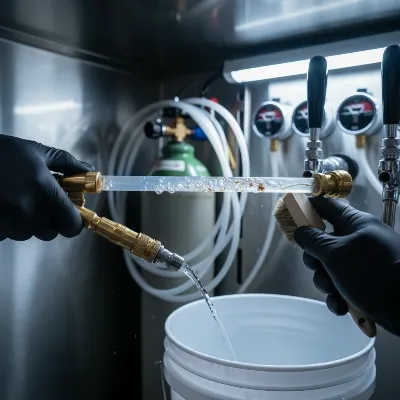 Technician cleaning beer lines in a home kegerator to ensure optimal beer freshness and system hygiene.
Cleaning Components Beyond the Lines
While lines are paramount, other components also require attention:
- Keg Coupler: This often-overlooked part can harbor bacteria. Disassemble and soak it in a sanitizing solution, scrubbing gently with a soft brush.
- Exterior and Interior: Regularly wipe down the exterior and interior of your kegerator to keep it clean and prevent mold.
- CO2 Regulator and Tank: Inspect for leaks by applying a soapy water solution to connections and checking for bubbles.
System Checks
- Pressure Settings: Periodically verify your CO2 regulator’s pressure settings to ensure they remain appropriate for the beer style and match the brewer’s recommendations.
- Gaskets and Seals: Inspect all gaskets and seals for wear or damage. A compromised seal can lead to temperature fluctuations or CO2 leaks, both detrimental to beer freshness.
- Purge CO2 Line: Purging the CO2 line every two weeks or with each keg change helps prevent beer from backing up into the hose and regulator, avoiding buildup.
Recognizing When Your Beer Has Gone Bad
Even with the best maintenance, beer is a perishable product, and eventually, it will show signs of spoilage. Here’s what to look for:
- Flat Taste/Lack of Carbonation: This is often the first sign, indicating CO2 has escaped or not been maintained.
- Sour or Vinegary Aroma/Taste: A distinct sour or vinegar-like smell or taste is a strong indicator of bacterial contamination (often from dirty lines).
- Unusual Cloudiness or Haze: While some beer styles are naturally cloudy, a sudden or unusual haziness can signal spoilage.
- Off-Flavors: Any metallic, papery, skunky, or generally unpleasant taste that wasn’t present when the beer was fresh.
“The true enemy of draft beer is oxygen. By meticulously controlling its presence and maintaining a pristine dispensing environment, you essentially press pause on the spoilage clock, allowing the beer’s intended flavors to shine.” – Admin, ReviewTraff.com, Draft Beer Systems Specialist
Conclusion
Understanding how long a keg lasts in your home beer dispenser involves more than just a simple number; it’s about appreciating the science and care behind preserving quality draft beer. By choosing the right dispensing system (always opt for CO2 over a party pump), maintaining optimal temperatures, setting correct CO2 pressure, and diligently following a cleaning and maintenance routine, you can significantly extend the life and enjoyment of your kegged beer. Don’t let your investment go to waste – treat your kegerator and your beer with the attention they deserve, and you’ll be rewarded with countless perfect pours. What’s your favorite beer style to keep on tap at home, and what are your best tips for maintaining its freshness?
Frequently Asked Questions
How long does an untapped keg remain fresh in a refrigerator?
An untapped, properly refrigerated keg of pasteurized beer can remain fresh for up to 2 to 6 months. Unpasteurized craft beer, however, has a shorter shelf life of approximately 6 to 8 weeks before tapping. Always check the 'born on' or expiration date on the keg.
Can you safely drink stale beer from a keg?
Drinking stale beer from a keg is generally not harmful to your health, provided it hasn't been contaminated by mold or harmful bacteria. The main issue will be a significantly diminished flavor, aroma, and carbonation, resulting in an unpleasant drinking experience.
What are the consequences of having too low CO2 pressure in a kegerator?
If your CO2 pressure is too low, the beer's dissolved carbon dioxide will escape into the keg's headspace, causing the beer to become flat. You may also experience excessive foaming when pouring, as inadequate pressure can lead to rapid carbonation loss as the beer travels through the lines.
What happens if the CO2 pressure in my kegerator is set too high?
Too much CO2 pressure can result in over-carbonated beer, leading to a fizzy, biting mouthfeel and often an excess of foam with every pour. This imbalance can also push CO2 into the beer lines at an undesirable rate, altering the beer's intended characteristics.
What is the ideal temperature range for storing beer in a kegerator?
The ideal temperature for storing and serving draft beer in a kegerator is between 38u00b0F (3u00b0C) and 40u00b0F (4u00b0C). This range effectively slows down bacterial growth and maintains the beer's stability, ensuring optimal freshness and taste.
Extend Your Keg's Life in a Kegerator
To ensure your beer stays fresh for as long as possible and tastes its best, diligent maintenance of your kegerator is crucial.
After each use, rinse your faucet with water to prevent beer residue from drying inside, which can lead to bacterial growth and off-flavors. Also, empty and clean your drip tray daily to prevent odors and mold buildup.
Disassemble your faucet weekly and soak its components in warm water with a beer line cleaning solution. This deeper clean helps remove any buildup missed by daily rinsing, ensuring better hygiene.
Every two weeks, or each time you change a keg, perform a full beer line cleaning using a specialized beer line cleaning solution. This critical step prevents the buildup of beer stone, mold, and bacteria that can taint your beer's flavor and accelerate spoilage.
Disassemble and soak the keg coupler in a sanitizing solution, scrubbing gently with a soft brush, as this part can harbor bacteria. Regularly wipe down the exterior and interior of your kegerator to keep it clean and prevent mold growth.
Periodically verify your CO2 regulator's pressure settings to ensure they remain appropriate for the beer style and match the brewer's recommendations. Inspect all gaskets and seals for wear or damage, as a compromised seal can lead to temperature fluctuations or CO2 leaks, both detrimental to beer freshness.
Get our weekly buyer guide
Practical specs, not advice. Unsubscribe anytime.

Great info here. I’ve been using a party pump for backyard BBQs and always noticed the beer went flat so fast. The explanation about oxygen exposure and how it reduces freshness to just 8-24 hours was a real eye-opener. Definitely investing in a proper CO2 system now for better quality.
Good overview, but I wish there was a bit more detail on specific CO2 pressure settings for different beer types. My lagers seem to hold up well, but my stouts sometimes lose their fizz faster than the 90-day pasteurized estimate. Still, it’s a solid starting point for understanding keg longevity.
This guide was super helpful! I always wondered about the real difference between pasteurized and unpasteurized kegs. Now I know why my favorite craft beer from the local brewery only lasts about 6 weeks, even in my CO2 system. It totally makes sense now and I’m better prepared to plan my purchases.
Fantastic resource! I’ve had my kegerator for years and always just guessed how long things would last. Knowing that pasteurized beers can genuinely last up to 6 months with a CO2 system is a game-changer for buying larger kegs. No more rushing to finish a good brew!